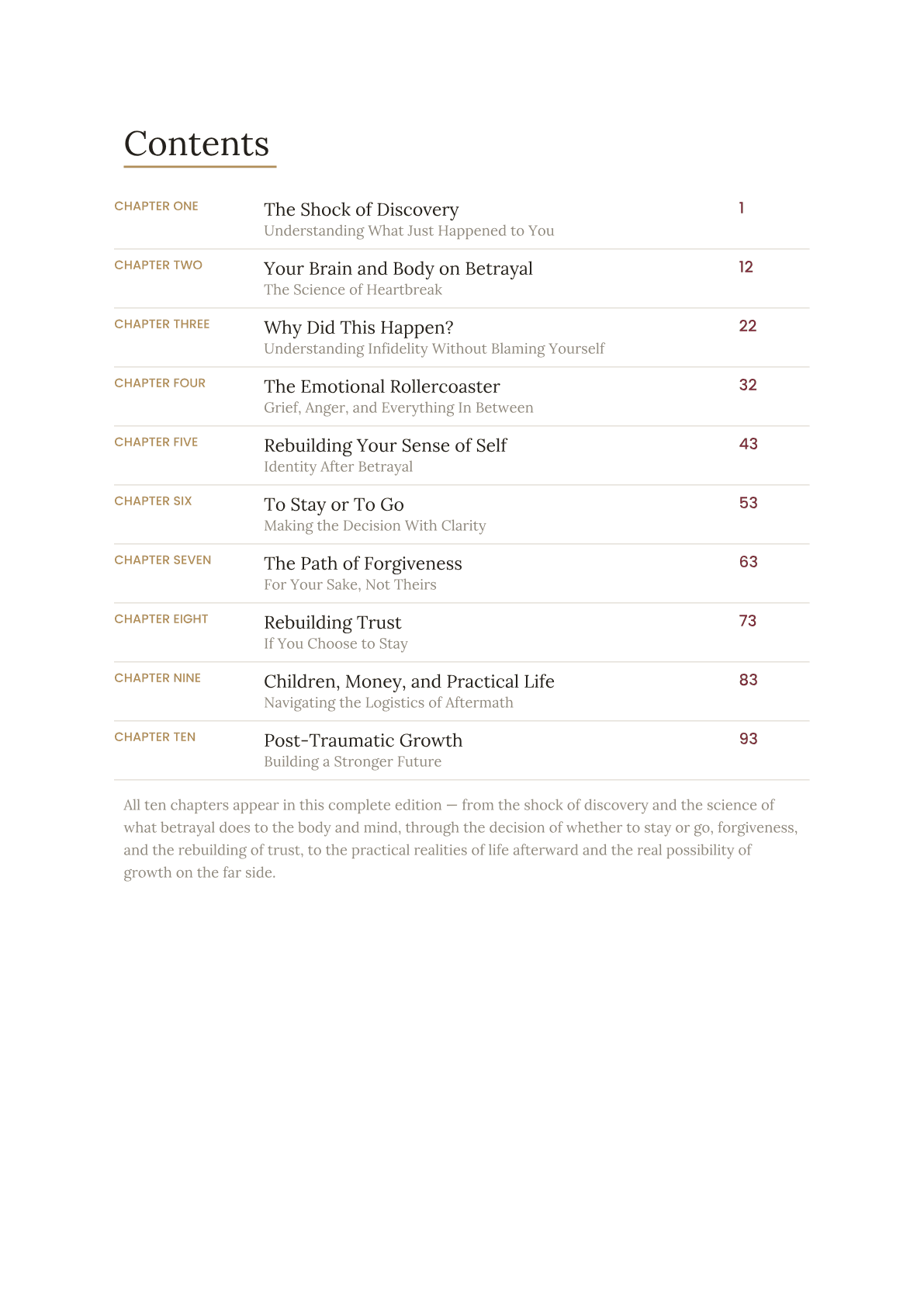
The full ten-chapter route
A complete map from discovery shock through trust, logistics, and post-traumatic growth.
A research-informed guide for the one who was cheated on.
Surviving, understanding, and healing after infidelity, grounded in psychology, neuroscience, and couples research.
Also available
The Long Way Back, for the one trying to repair.
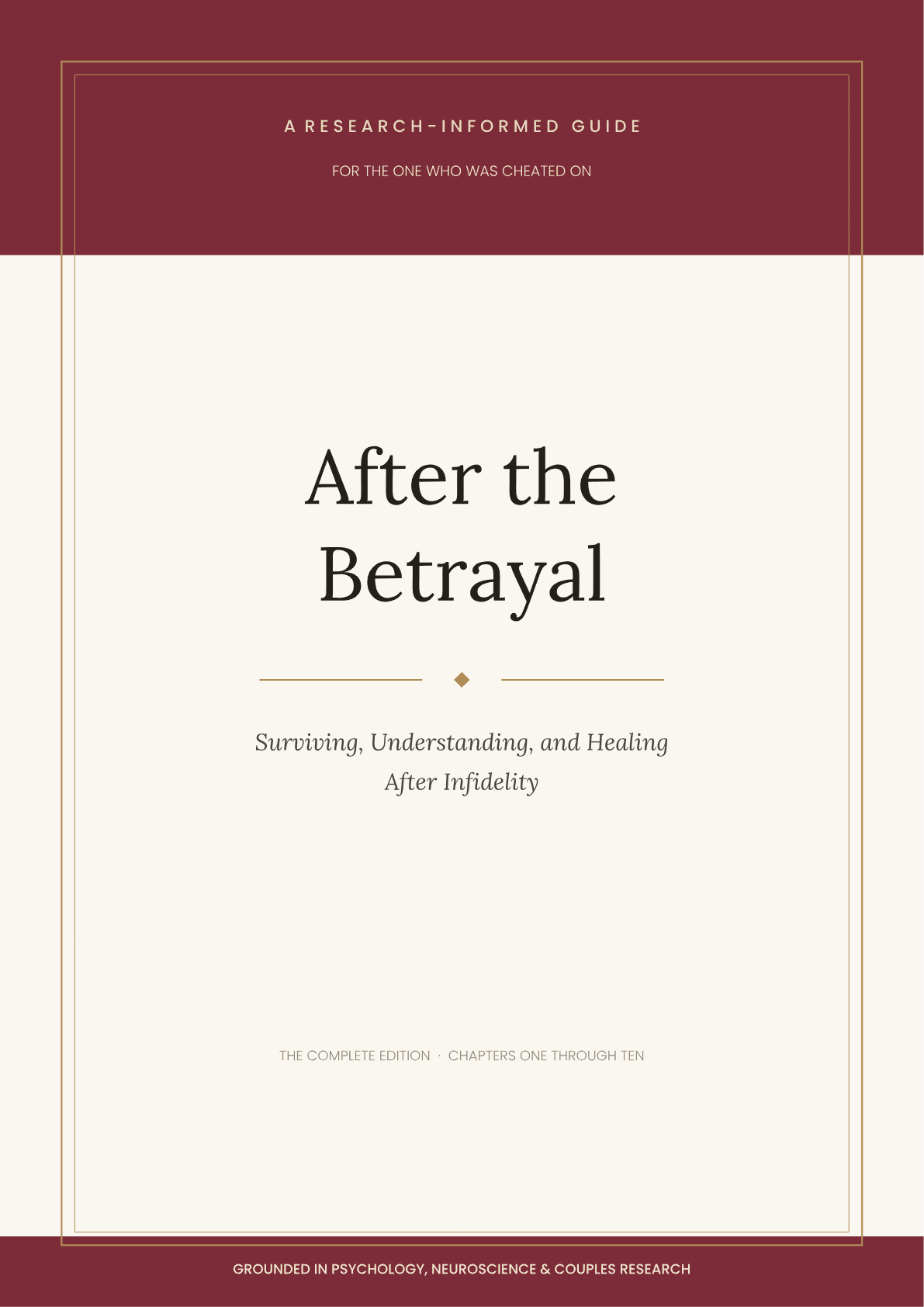
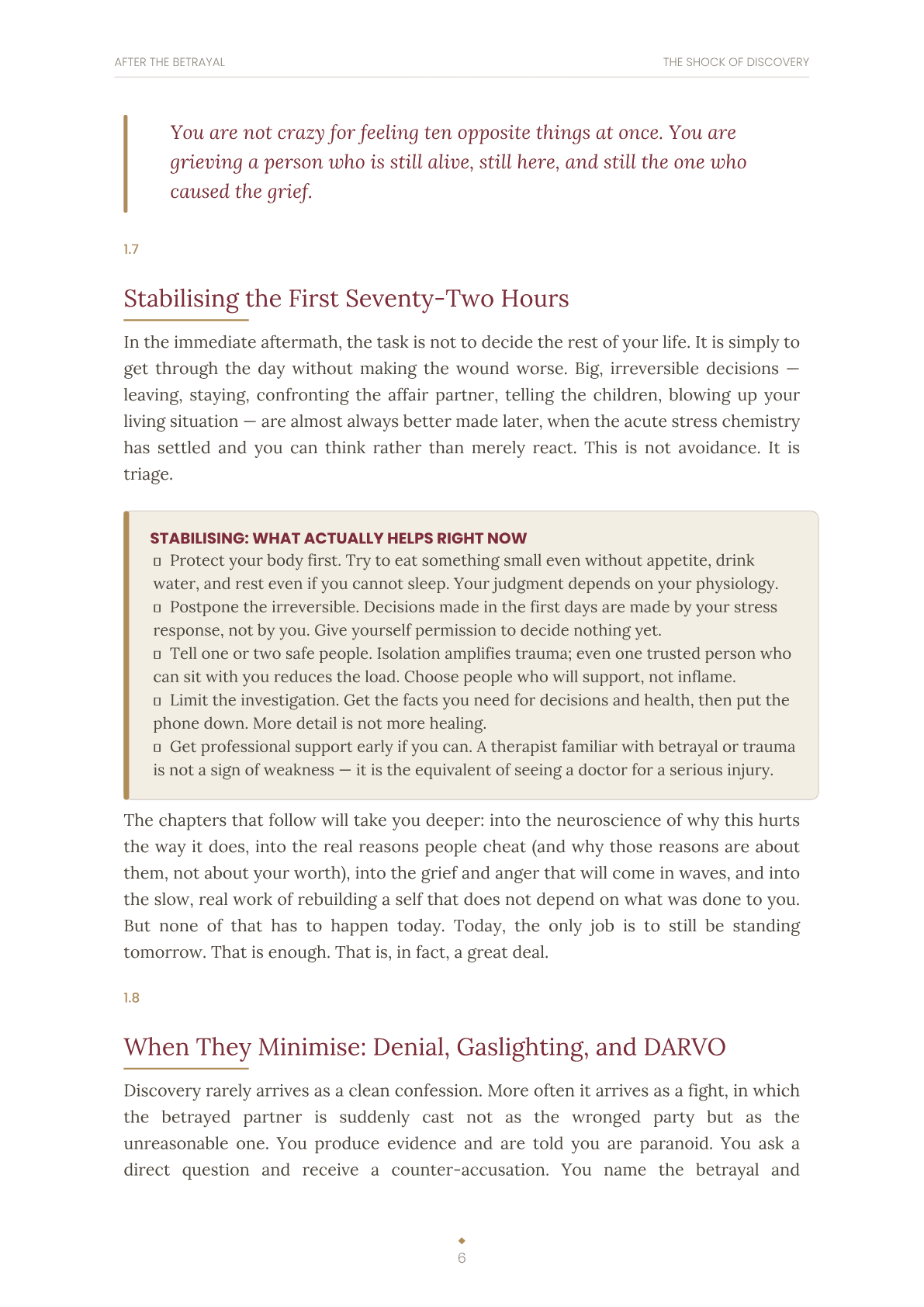
These are real page screenshots from the complete edition, so readers can see the structure, tone, and practical value before they buy.
A complete map from discovery shock through trust, logistics, and post-traumatic growth.
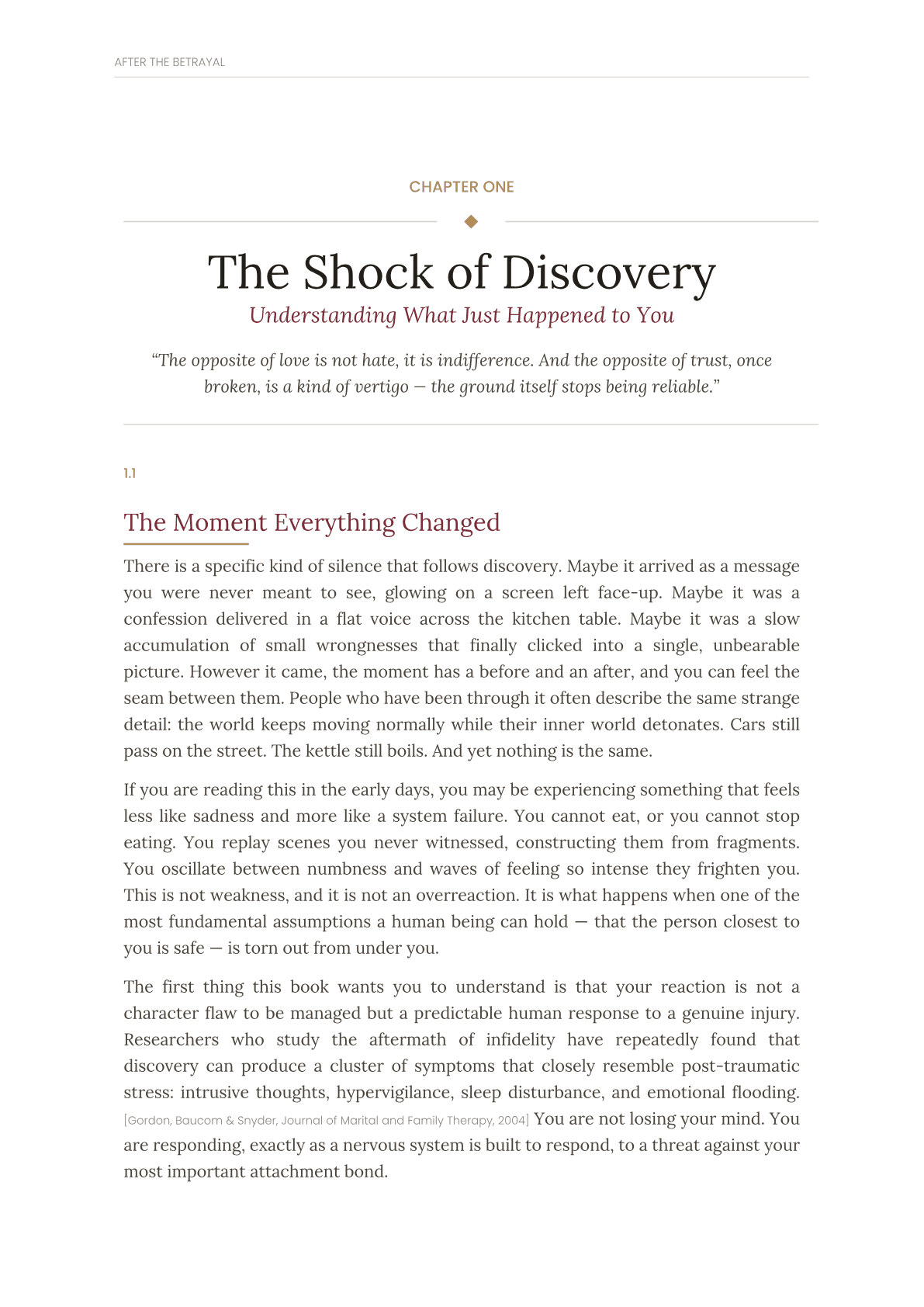
Each section begins by naming the experience plainly before moving into research and guidance.
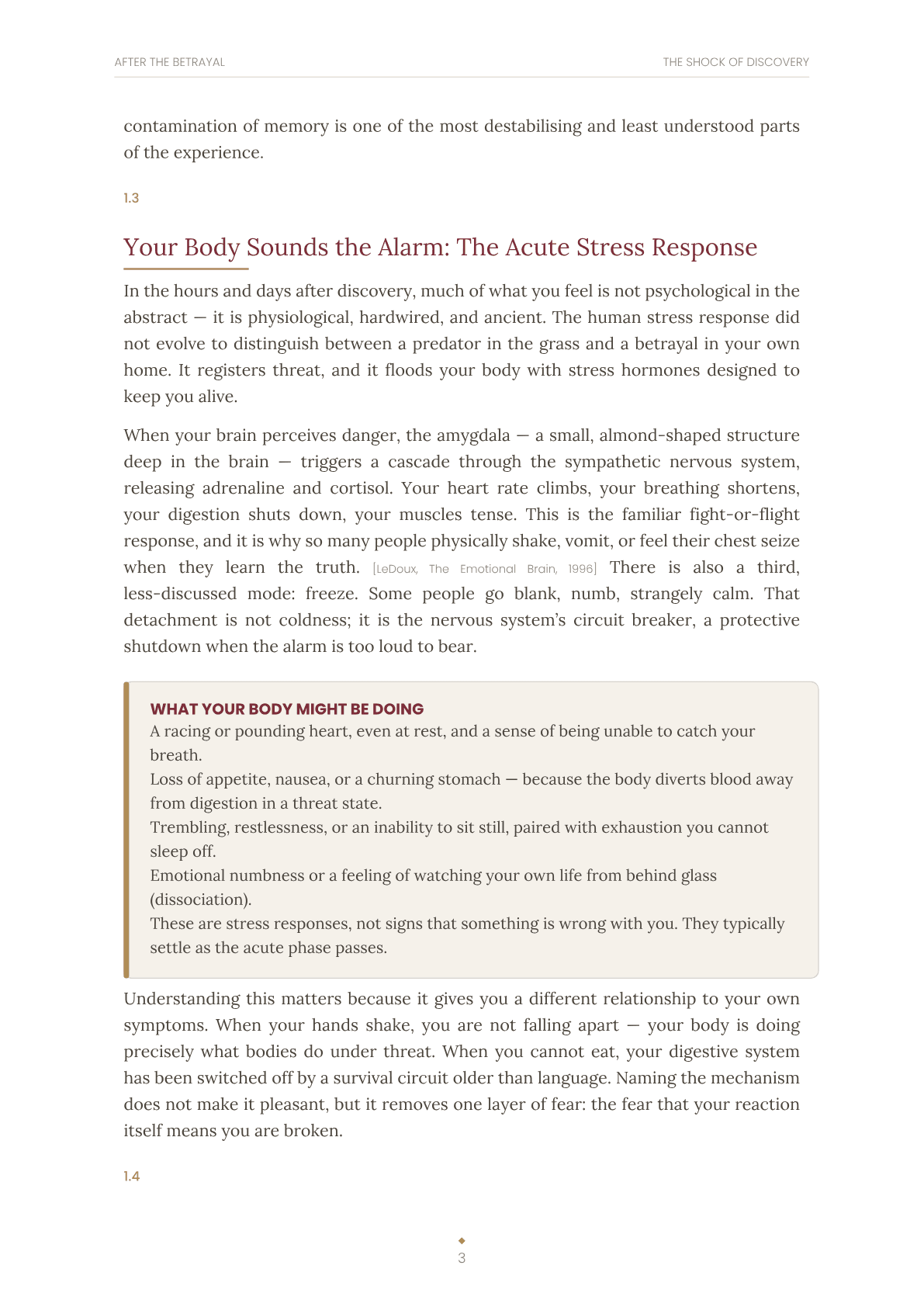
Body and brain explanations are paired with practical boxes that translate stress responses into normal language.
The early-days material gives readers a stabilising framework when everything feels too large to solve.
The opening chapters give the pain a shape without rushing you toward a decision. They are written for the nights when sleep will not come and the mind keeps replaying what it never saw.
Name the first impact without minimizing it: the racing thoughts, the numbness, the questions, and the sense that reality has shifted.
Understand why appetite, sleep, trembling, vigilance, and intrusive images can change so quickly after betrayal.
Use a steadier framework for the worst early days: protect the body, postpone the irreversible, and let trusted support in.
Ten chapters move from the first impact through the body and mind, the stay-or-go decision, trust, practical life, and the real possibility of growth afterward.
Understanding what just happened to you.
The science of heartbreak and alarm.
Understanding infidelity without blaming yourself.
Grief, anger, longing, numbness, and everything between.
Identity after betrayal and the return of self-trust.
Making the decision with clarity, not panic.
For your sake, not theirs.
What repair requires if you choose to stay.
Navigating the logistics of the aftermath.
Building a stronger future on the far side.
The book draws on real work from psychology, neuroscience, and couples therapy, then turns it into language a hurt nervous system can actually use.
Betrayal trauma, attachment, grief, rumination, self-blame, forgiveness, and decision-making are translated into plain language.
The book explains why social pain can feel physical and why the nervous system can stay on alert after discovery.
Where repair is possible, the guide is clear about remorse, transparency, boundaries, and what trust actually asks for.
When the science is debated, the text says so. The goal is clarity, not overconfident slogans.
A clear note on AI, sources, and lived experience
This book is not a personal memoir and does not ask you to trust a single person's story. It is built from real studies, established books, and clinical writing, with sources mentioned throughout so readers can see where the claims come from.
A custom AI workflow was used as an organising tool: to bring scattered information together, compare themes, and turn dense research into a useful guide. The material was then read and corrected by people who experienced betrayal, did the hard work of recovery, and knew what felt accurate in real life.
2amlibrary is made by Emma Williams, Sofia Carter, and Elian Vale. We make research-based books for people who need the useful version of the evidence: clear, sourced, emotionally honest, and organised into one place.
More about usResearch synthesis and reader clarity
Emma focuses on turning dense studies and clinical writing into calm, readable chapters that people can use when life feels unstable.
Lived-experience review and tone
Sofia helps keep the writing human, careful, and grounded in what recovery can actually feel like beyond the research language.
AI-assisted research workflow
Elian builds the custom AI process that helps gather scattered sources, compare patterns, and shape the material into one coherent guide.
How we use AI responsibly
Our custom AI workflow helps combine information that already exists across studies, books, and expert writing, then organise it into a guide that is easier to understand. It is a tool for synthesis, comparison, and structure, not a replacement for sources or human judgment. People with lived experience review the material so the final book stays grounded, clear, and useful.
The page stays honest about what a book can and cannot do: offer structure, language, and evidence, while respecting the need for real support.
It is written for the person who was cheated on: the one who did not choose the affair but now has to live with its aftermath.
No. It supports clarity before resolution, whether the eventual choice is repair, separation, or simply getting through the next day.
No book can replace real support. This guide gives language, research, and structure while encouraging professional help when the pain is severe.
Yes. A custom AI workflow helped gather, compare, and organise research that is already publicly scattered across studies, books, and clinical writing. The book is not presented as personal experience: it is a sourced synthesis of real research, then read and corrected by people who have lived through betrayal and rebuilt afterward.
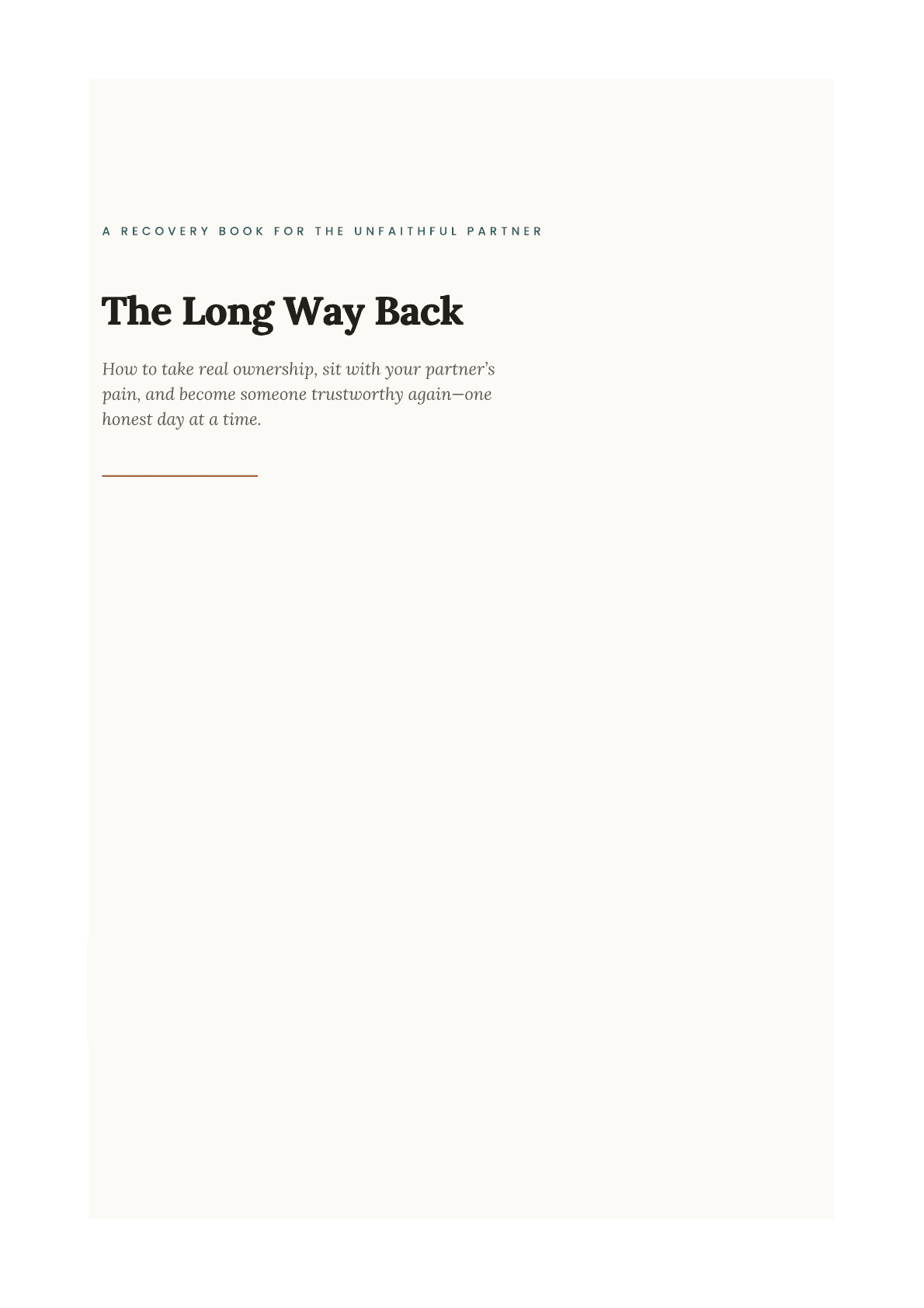
The complete two-book collection
Get both complete PDF editions: After the Betrayal for the person who was hurt, and The Long Way Back for the person taking responsibility. Two perspectives, one clearer path forward.
Secure Stripe checkout. Promo codes are accepted. Both PDFs are available immediately after confirmed payment. By purchasing, you agree to the terms of use.
Start with steadiness. The complete edition gathers all ten chapters into one careful guide for the aftermath of infidelity.
Complete edition
$9.99
One-time purchase for the complete edition of After the Betrayal. Checkout is securely handled by Stripe.
Read the free 3-page sampleBy purchasing, you agree to the terms of use.
Questions before buying? Email elianvale81@gmail.com.
Also available
The Long Way Back
A companion guide for the partner who wants to understand the damage, take responsibility, and rebuild carefully.
See The Long Way Back